India

TIC Council

India

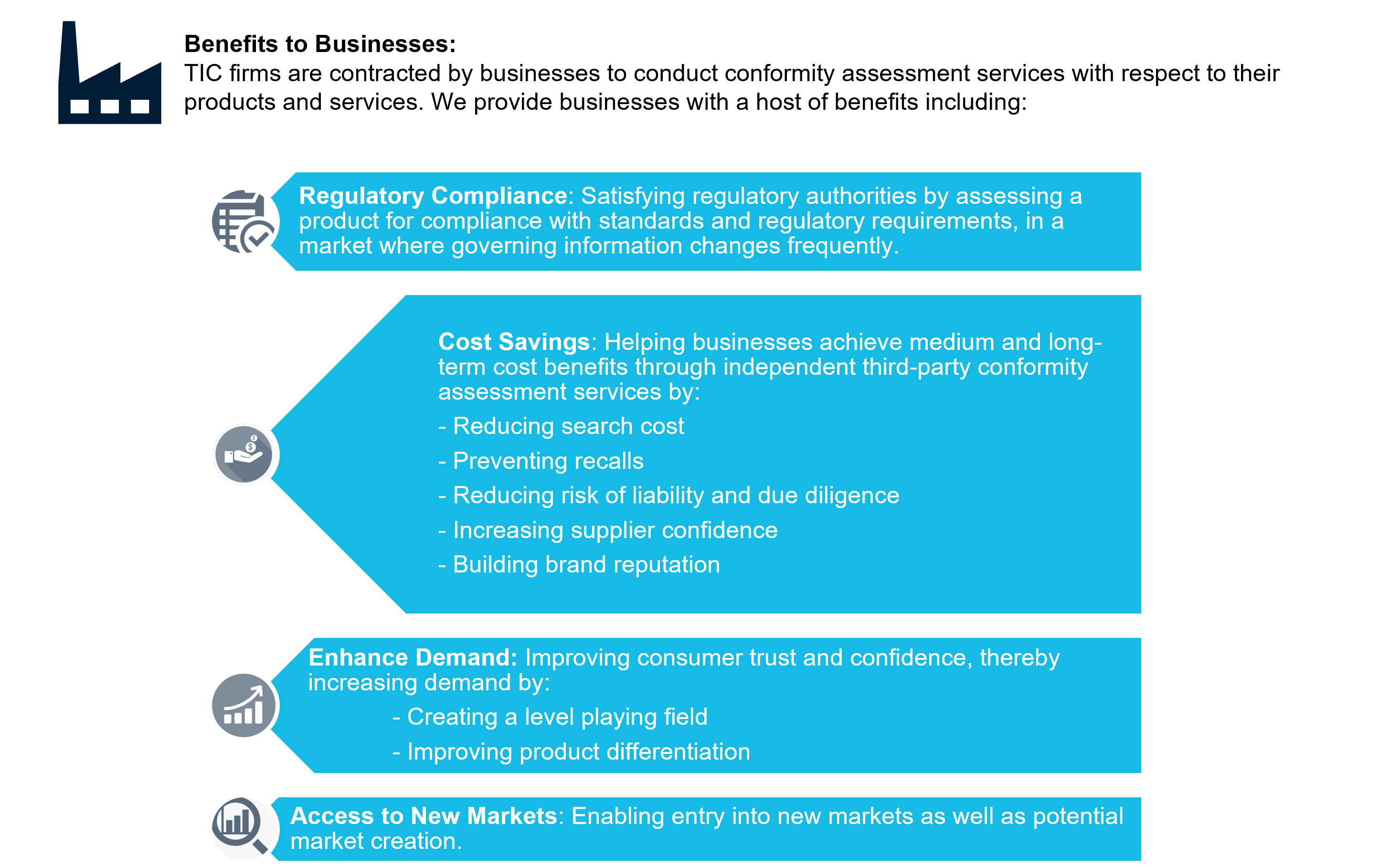
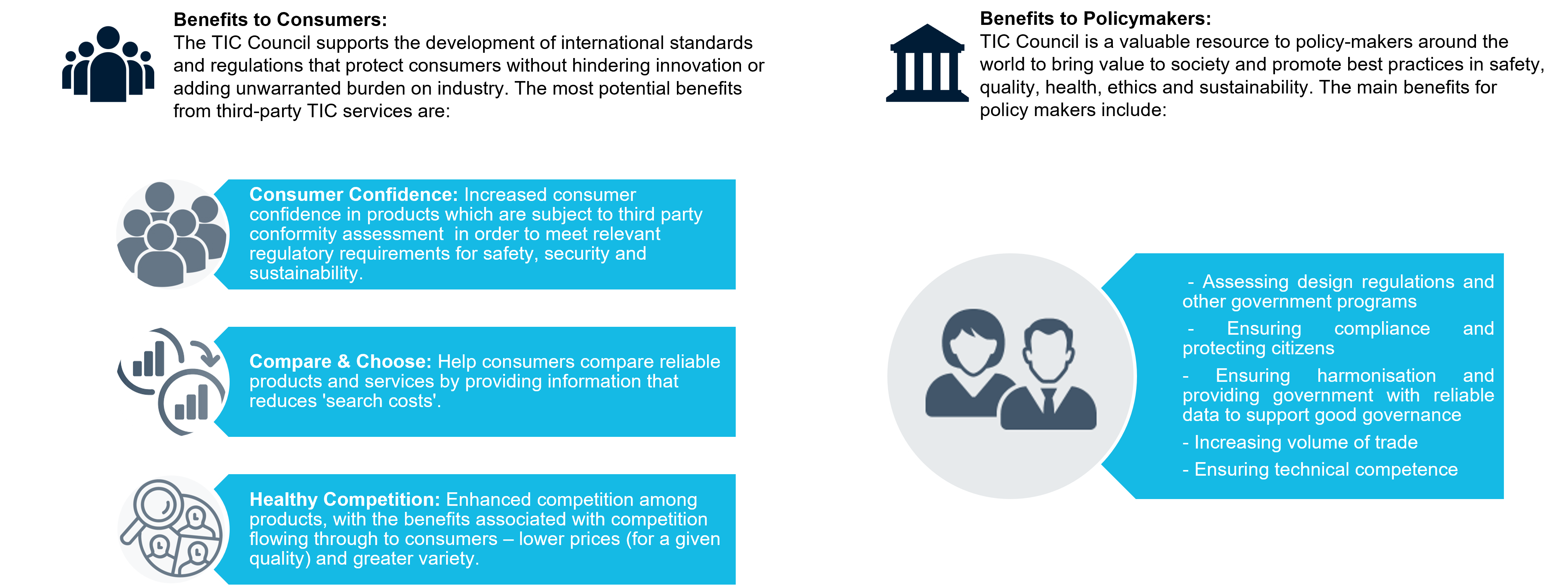
  1. TIC Council India is the voice of the independent Testing, Inspection and Certification Industry in India and engages with governments and key stakeholders to advocate for effective solutions that protect the public, support innovation and facilitate trade and improve the quality for consumers. TIC Council India is a registered organisation in India as an independent legal entity. TIC Council India is a valuable resource to policy-makers in the region to bring value to society and promote best practices in safety, quality, health, ethics and sustainability.

TIC Council, India is involved in diverse activities of the TIC sector to increase consumer confidence in products that are subject to third-party conformity assessment in order to meet relevant regulatory requirements for safety, security and sustainability.


Director & Main Office



Dr. Seema Shukla, Executive Director - contact address: sshukla[A]tic-council.org

Block No. 12, Plot A
Infocity Sector 33 and 34
Gurgaon, Hayana, India
india@tic-council.org


Benefits of TIC Council India
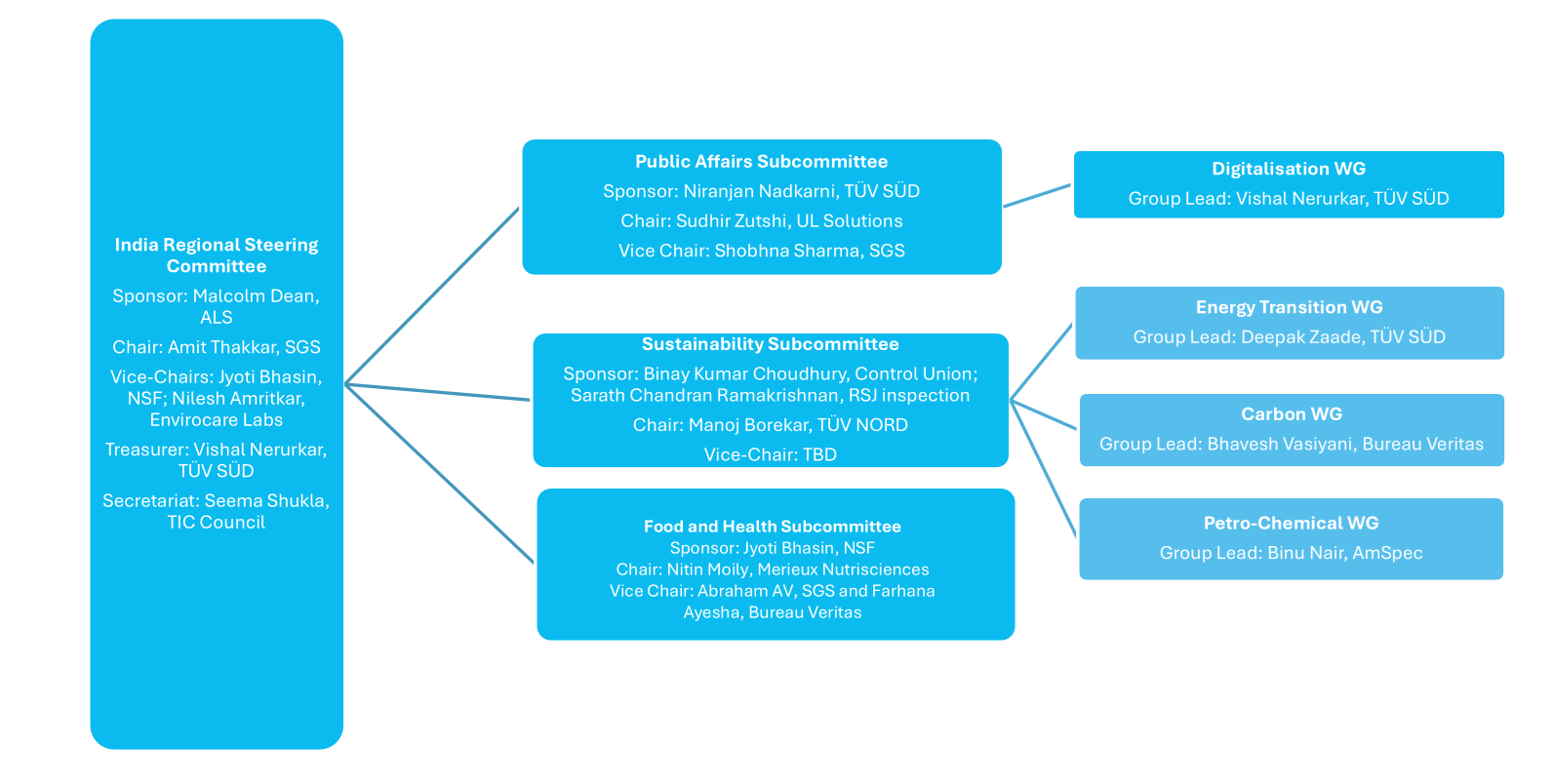
Committee roles:
Publications
Recommendations for a Robust Cybersecurity Framework in India
This paper provides recommendations to further strengthen the cybersecurity ecosystem in India and discusses how the TIC sector can play a pivotol role to support the stakeholders to achieve the desired objective.
Recommendations for a Promising Circular Economy Ecosystem In India
TIC Council India gives recommendations to support India to build a promising circulare conomy ecosystem while putting it on the path of economic prosperity.
India 2025: Building a Safer and Sustainable Tomorrow
This document includes TIC Council India’s recommendations for key priorities to support the government of India’s vision for transformative progress by 2025, driving the country towards becoming a developed nation.
Protecting Modern Advanced Metering Infrastructure In The Age Of AI
This document discusses the cybersecurity challenges associated with smart meters in modern digital power grids and outlines key security layers needed to protect them. It emphasizes a segregated security architecture covering device, network, data, cloud, user, and AI system security, highlighting the crucial role of the TIC sector in ensuring compliance, reliability, and safety.
Strengthening Trust in Sustainability Assurance in India
TIC Council India gives policy recommendations for a credible, transparent, and trusted assurance system.
Robust and Credible Indian Carbon Credit Trading Scheme (CCTS)
TIC Council India has released a new position paper with a set of recommendations aimed at improving the credibility, efficiency, and global acceptance of the Indian Carbon Credit Trading Scheme (CCTS). These proposals are designed to reduce unnecessary burdens on businesses, make verification more reliable, and ensure India’s carbon credits are recognised internationally.
Enhancing Safety and Compliance in the Petroleum Sector
This document outlines key recommendations by TIC Council India to enhance safety outcomes and strengthen operational resilience within India’s petroleum sector. It addresses the industry’s complex, high-risk environment and emphasises improved compliance and risk management practices.
Next Gen Quality Infrastructure Reforms
TIC Council India has submitted a set of recommendations aimed at helping policymakers build a QI system that supports both domestic competitiveness and international market access.
From Safety to Competitive Advantage: India's TIC Sector as the Backbone of a Resilient and Trusted Food Ecosystem
Between August 2024 and October 2025, TIC Council India convened five E-Food Dialogues, bringing together regulators, scientists, industry leaders, certification bodies, and TIC professionals to examine the most pressing challenges facing India's food safety ecosystem. Across sessions on crisis preparedness, emerging contaminants, certification, science-based risk assessment, and data-driven decision-making, panellists surfaced hard numbers, on-the-ground realities, and proven solutions from practitioners at every node of the food value chain? from fisheries and farms to laboratories, export desks, and Codex committee rooms.

Share this page :